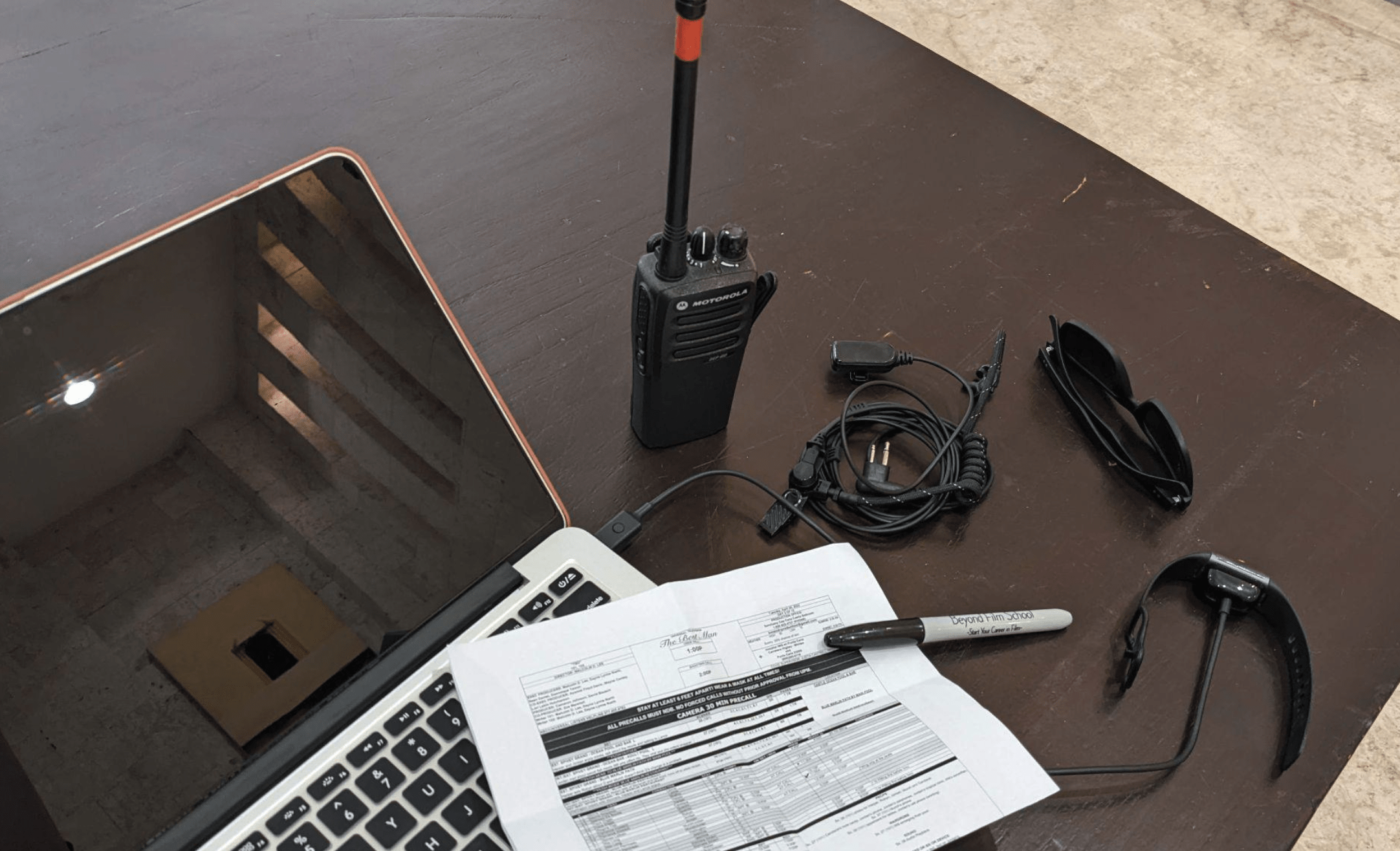

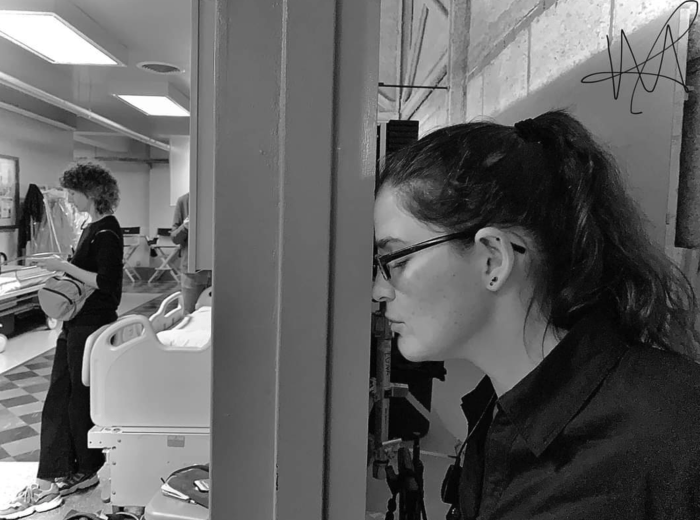
The #1 Mistake New Set PAs Make
It’s not your resume.
It’s not your experience.
It’s not even what you know.
The #1 mistake new PAs make is walking onto set looking unsure of themselves, and letting that timid energy lead everything they do.
You can see it immediately.
The hesitation before speaking.
The quiet voice on the walkie.
The second-guessing before completing a task.
And here’s the hard truth: people on set notice that faster than anything else.
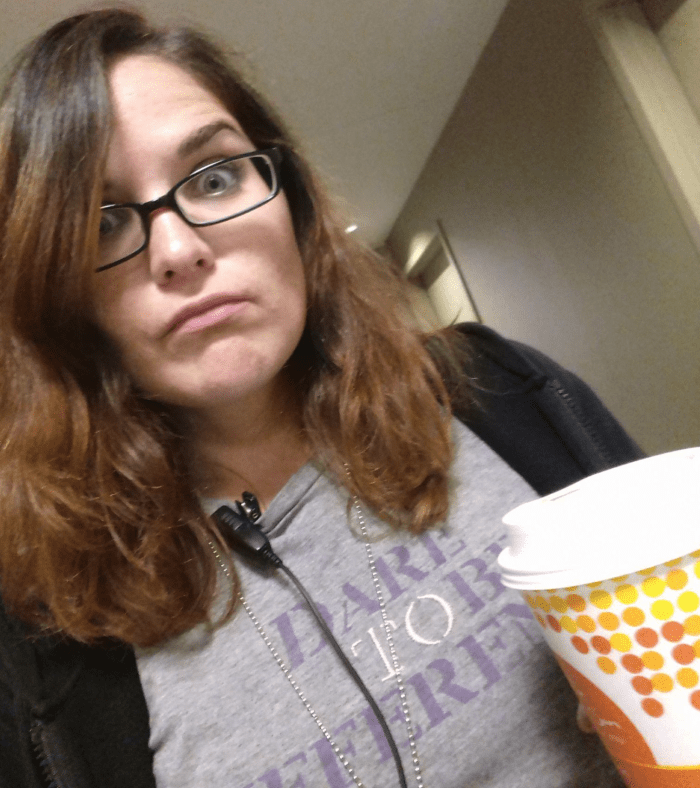
Why Confidence Matters More Than You Think
Being a PA is an entry-level position, yes, but it’s not a passive one. You are the eyes and ears of the production. You’re communicating information, relaying messages, locking up, moving people, solving small problems before they become big ones. None of that works if you’re afraid to take up space.
Confidence on set doesn’t mean you know everything. It means you trust yourself to figure things out, to ask when you need clarity, and to execute without hesitation once you have direction. Because from the outside, confidence reads as reliability. And reliability gets you hired again.
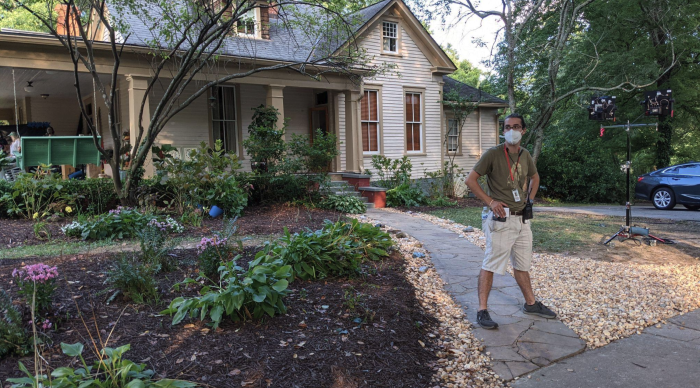
Timid Energy Creates More Problems Than Mistakes Do
A lot of new PAs think: “I don’t want to mess up, so I’ll just stay quiet.”
That’s actually what creates the problem.
When you don’t speak up:
- You don’t ask the question that would’ve saved time
- You don’t clarify instructions
- You hesitate when something needs to move quickly
And suddenly, it’s not about avoiding mistakes, it’s about slowing down the entire set.
Here’s the shift: making a mistake is fixable.
Not communicating? That’s what gets remembered.

What Confidence Actually Looks Like on Set
Let’s make this practical, because “be confident” is vague advice.
Confidence on set looks like:
- Speaking clearly on the walkie (even if your voice shakes at first)
- Saying “copy” when you understand a task
- Asking a quick clarifying question before executing
- Moving with purpose instead of waiting to be told twice
- Making eye contact when someone gives you direction
It’s not loud. It’s not aggressive. It’s grounded. And most importantly, it’s consistent.
You Don’t Need to Feel Confident to Act Confident
This is where people get stuck. They think confidence is something you either have or don’t have. Not true.
Confidence is built through action.
You might feel nervous on your first few days. That’s normal. Everyone does. But the PAs who grow the fastest are the ones who don’t let that nervousness control how they show up.
They still speak.
They still move.
They still engage.
And over time, that becomes real confidence.

Preparation Helps Eliminate Timidness
A lot of timidness comes from not feeling prepared. So control what you can. Know the call sheet. Understand the basic flow of the day. Be prepared
Listen closely during to your walkie and things they need you to do.
The more prepared you are, the less you’ll hesitate. And the less you hesitate, the more confident you appear.
Final Thought
No one expects you to be perfect on your first day as a PA. But they do expect you to show up ready to contribute. Confidence is what turns you from “extra hands” into someone the team can rely on. So if you take one thing onto your next set, let it be this:
Don’t shrink yourself. You’re there for a reason.