

How to Stand Out as a Set PA in Your First Week
Your first week as a Set PA matters more than you think. Not because you’re expected to know everything, you’re absolutely not, but because this is when people decide whether they want to work with you AGAIN.
Standing out on set has very little to do with experience and everything to do with how you show up.
1. Lead With a Good Attitude (Even When You’re Tired)
A good attitude is the fastest way to separate yourself from other new PAs. A ton PAs take themselves too seriously, and then there are those who don’t take it serious enough. Have a pleasant and good attitude – but do the job. There’s a balance for sure!
Everyone on set is exhausted. Stress is high, time is tight, and problems pop up constantly. Complaining, eye-rolling, or visibly checking out is noticed immediately, especially from someone new.
You don’t need to be overly cheerful. You do need to be calm, respectful, and steady. Handle frustration quietly. Stay professional even during long hours. People remember the PA who stayed solid when things got chaotic.

2. Be Genuinely Grateful – It Shows in Your Work
Gratitude matters more than people think. And it shows in how you talk, how you move, and how you work. So, you can’t fake this.
When you’re grateful to be there, it shows in how seriously you take tasks, even the small ones. Production and crew can tell who sees the job as an opportunity versus who thinks it’s beneath them. And when you think you’re better than any task you get I don’t think you’re ready to be on set yet. Even as an AD I’ll still do a lock-up if needed, or grab a coffee for someone.
Being grateful doesn’t mean being timid or apologetic, or have people step all over you. It means understanding that you’re earning trust and learning how set life really works, and you truly appreciate the opportunity. Not to mention that fact that when you are grateful there’s not room for complaining. You tend to think more on the solution side than just complaining about things.
That mindset makes you easier to work with and easier to rehire.
3. Be Helpful, Not Annoying
This is a huge one!
Your job is to make your boss’s life easier, not harder. That means helping without hovering, being proactive without constantly interrupting, and staying available without demanding attention.
It’s okay to check in once:
“Is there anything you need right now?”
If the answer is no, that’s not a rejection. That means stay nearby, alert, and ready.
Avoid:
-
Repeatedly asking if you can help when nothing is needed
-
Inserting yourself into conversations
-
Creating work just to look busy
Helpfulness is about awareness, not noise.

4. Learn When to Talk, and When Not To
Knowing when not to speak is a critical set skill.
Stay quiet during:
-
Active shooting
-
Director and actor conversations
-
AD problem-solving moments
-
Any tense, emotional, or time-sensitive situation
Speak up when:
-
You need a quick clarification
-
Safety is involved
-
You’ve been directly addressed
-
You actually have relevant information
If you’re unsure, wait. Observing and listening is never a mistake on set.

5. Anticipate Needs Without Needing to Be Called On
There will be down moments on set. That’s normal. Managing your need to constantly be “used” is part of the job. You don’t need to fill every quiet moment with action, you need to be ready when you’re needed.
Pay attention to patterns:
-
Who needs water regularly?
-
Where do people gather between takes?
-
What runs happen over and over?
Anticipation beats constant questions. When you consistently think one step ahead, people start trusting you with more responsibility. And this makes the Key PA and ADs day so much easier!

6. Stay Busy, But Don’t Invent Work
Standing around scrolling your phone looks bad.
Inventing pointless work looks worse.
If you’re not assigned something:
-
Stay close to your department
-
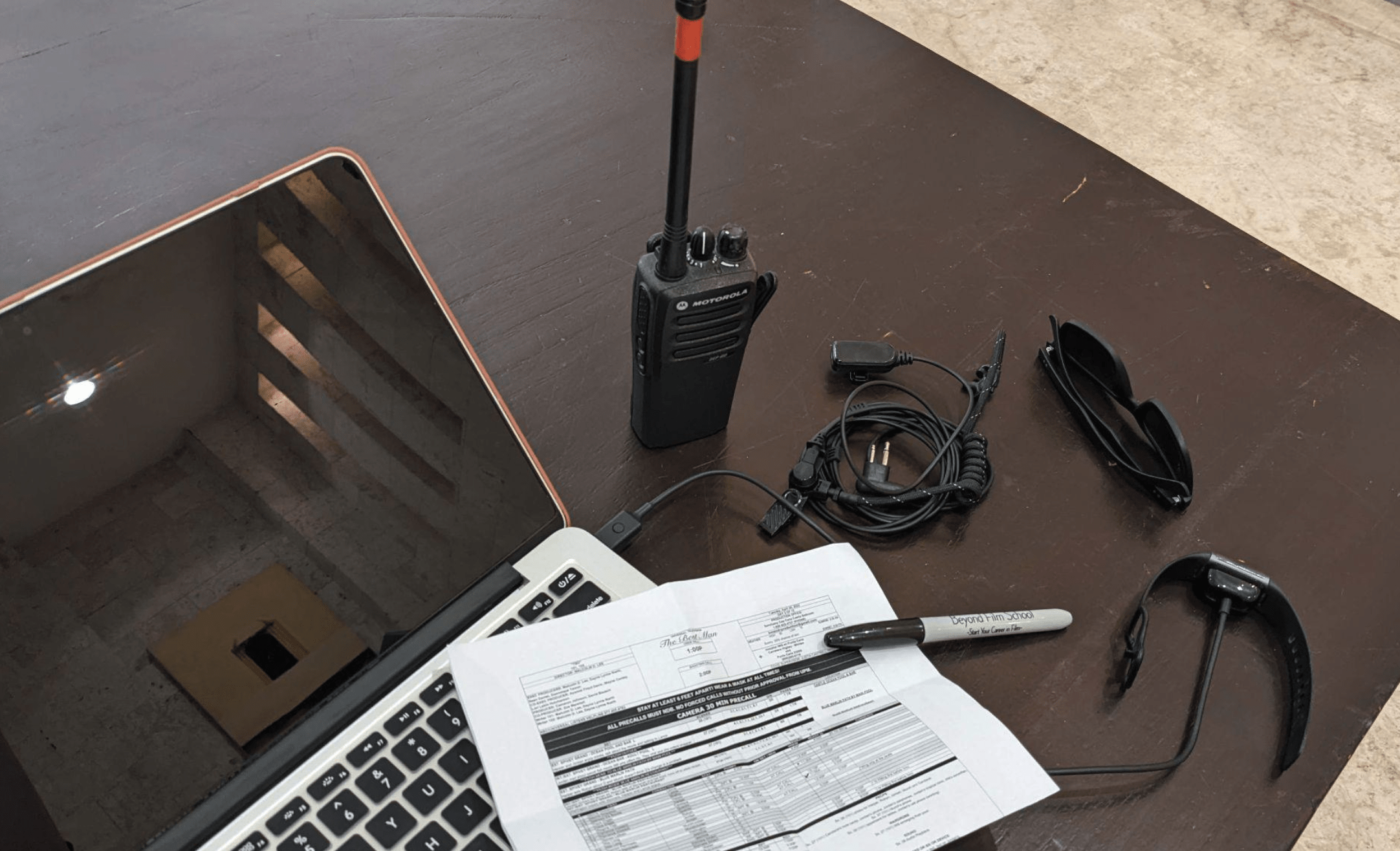
Keep your walkie on
-
Watch what’s happening
-
Be ready to move
Being still-but-ready is a skill, and one good PAs master early.

7. Be Reliable Down to the Smallest Details
Reliability isn’t just showing up on time.
It’s:
-
Completing runs exactly as given
-
Repeating instructions back if needed
-
Communicating if something changes
-
Letting your boss know when a task is done (this is a HUGE one many PAs forget to do, very frustrating to ADs)
When someone doesn’t have to follow up with you, you instantly become valuable.

8. Don’t Try to Impress – Try to Be Useful
Your first week is not the time to:
-
Pitch ideas
-
Name-drop
-
Talk about your future projects
-
Overshare your ambitions
People don’t rehire PAs because they were impressive. They rehire PAs because they were helpful, reliable, and easy to work with.
Let your actions speak for you. Don’t give into the “What about me” energy.

9. End Every Day Like You Want to Come Back
Wrap matters.
Help clean up without being asked. Return equipment properly. Check your call time for the next day. Thank the AD or Key PA if the timing feels appropriate.
Small professionalism at the end of the day sticks longer than you think.

The Bottom Line
Standing out as a Set PA isn’t about being loud, flashy, or constantly busy.
It’s about being:
-
Positive
-
Grateful
-
Observant
-
Calm
-
Helpful without being intrusive
If you can manage your energy, your ego, and your need to constantly prove yourself, you’ll quickly become the PA people trust — and call again.
And in film, getting called again is everything.